
Spanish Journal of Palaeontology
SPANISH JOURNAL OF PALAEONTOLOGY (SJP, originalmente REVISTA ESPAÑOLA DE PALEONTOLOGÍA) es la publicación científica de la Sociedad Española de Paleontología. Actualmente, la SPANISH JOURNAL OF PALAEONTOLOGY publica dos números al año, con artículos en castellano y en inglés británico (preferentemente). Manuscritos sobre nuevas líneas de trabajo y descubrimientos son especialmente bienvenidos. Estudios sobre ejemplos actuales pueden ser publicados si conllevan una incidencia paleontológica importante.
Journal information
Aims and Scopes
Spanish Journal of Palaeontology (SJP) is an international journal publishing original research on all aspects of palaeontology including systematics, biostratigraphy, palaeogeography, palaeoecology, palaeoclimatology and related fields. The journal particularly aims to promote palaeontological research by approaching the latest investigations to the global scientific community. After a positive response from the editorial team, the SJP publishes two issues per year (June and December), but also accepts special volumes on any research topic related to Palaeontology.
The first language of the journal is English. Papers in Spanish can be eventually considered if they provide an extensive summary in English for the online version highlighting the main results of the research.
An international editorial team, as well as guest editors, guarantee that all contributions are peer-reviewed and meet the highest standards. We would like to highlight, that as a non-profit making journal, our people (including reviewers and members of the editorial board), receive no payment for their work. For that reason, we are deeply grateful to all those researchers who give their time and effort to review on behalf of the Spanish Journal of Palaeontology.
We take publishing Ethics Statements very seriously and accept our responsibility to maintain the integrity of the scientific record as much as possible. This policy should be read in conjunction with our Guide for Authors.
Advantages of publishing in SJP
All papers are subject to international peer review by pairs within three to four weeks, with their acceptance based on quality alone. We have a compromise with the authors to provide paper proofs of their contributions within the next two weeks after final acceptance. In addition, SJP is published as an international fully Open Access peer-reviewed journal, accepting colour pages and unlimited space for authors free of charge.
To sum up:
- SJP offers fast review process and rapid publication
- SJP is an Open Access journal
- SJP is free of charge for authors
Spanish Journal of Palaeontology is indexed in international databases, including Biological Abstracts, Fuente Academica Plus, BIOSIS Previews, Scopus, Zoological Record, Latindex and SCImago Journal Rank among others. Contents of current issues are available on this webpage and through digital repositories and portals: Web of Science, EBSCO, Dialnet, Dulcinea, Miar, Sherpa Romeo and DOAJ.
The SJP is part of the University of Valencia`s Open Journal System journals allowing us to allocate all our contributions to a public and free accessible platform, letting us to access a complete overview of the impact of our publications (see our statistics here).
Journal Metrics:
Scimago Journal & Country Rank, Paleontology, SJR 0.23, Q4 (2022).
Scopus, Earth and Planetary Sciences, Palaeontology, CiteScore 0.9, Source Normalized Impact per Paper (SNIP) 0.223, Rank 89/108 (2021).

Spanish Journal of Palaeontology (former Revista Española de Paleontología) is Published by ©Sociedad Española de Paleontologia
ISSN: 2660-9568 (online)
2255-0550 (print)
Sello Calidad Revistas Científicas Españolas de la FECYT
Editorial board
CHIEF EDITOR
 Carlos Martínez-Pérez
Department of Botany and Geology, University of Valencia, 46100, Burjassot, Spain.
Carlos.Martinez-Perez @ uv.es
ASSOCIATED EDITORS
 Samuel Zamora
Spanish Geological Survey, 50006, Zaragoza, Spain.
s.zamora @ igme.es
 Sonia Ros-Franch
Department of Botany and Geology, University of Valencia, 46100, Burjassot, Spain.
Sonia.Ros @ uv.es
 Humberto G. Ferrón
ICBiBE, University of Valencia, 46100, Burjassot, Spain.
Humberto.Ferron @ uv.es
TECHNICAL EDITOR
Maria Victoria Paredes-Aliaga
Department of Botany and Geology, University of Valencia, 46100, Burjassot, Spain.
Maria.V.Paredes @ uv.es
EDITORIAL BOARD
Laia Alegret
Department of Earth Sciences, University of Zaragoza, 50009, Zaragoza, Spain.
laia @ unizar.es
Carmen Álvarez Vázquez
The Royal Botanic Garden of Cordoba, 14004, Córdoba, Spain.
paleo.calvarez @ jardinbotanicodecordoba.com
Julio Aguirre
Department of Stratigraphy and Paleontology, University of Granada, 18071, Granada, Spain.
jaguirre @ ugr.es
Susana Damborenea
Division of Invertebrate Paleozoology, CONICET – La Plata Museum, La Plata, B1900, Argentina.
sdambore @ fcnym.unlp.edu.ar
Ignacio Díaz-Martínez
Department of Earth Sciences and Condensed Matter Physics, University of Cantabria, 39005 Santander, Spain
ignacio.diaz @ unican.es
Philip C.J. Donoghue
School of Earth Sciences, University of Bristol, BS8 1TQ, Bristol, United Kingdom.
Phil.Donoghue @ bristol.ac.uk
Juan L. Cantalapiedra
Department of Life Sciences, University of Alcalá, 28805, Alcalá de Henares, Spain.
juan.lopezcantalapie @ uah.es
Christian Klug
Paleontological Museum, University of Zürich, 8006, Zürich, Switzerland.
chklug @ pim.uzh.ch
Xiaoya Ma
Centre for Ecology and Conservation, University of Exeter, TR10 9FE, Cornwall, United Kingdom
X.Ma2 @ exeter.ac.uk
M. Gabriela Mángano
Department of Geological Sciences, University of Saskatchewan, SK S7N 5E2, Saskatoon, Canada.
gabriela.mangano @ usask.ca
Enrique Peñalver
Spanish Geological Survey, 46004, Valencia, Spain.
e.penalver @ igme.es
Xabier Pereda Suberbiola
Department of Stratigraphy and Paleontology, University of País Vasco, 48080, Bilbao, Spain.
xabier.pereda @ ehu.eus
Catalina Pimiento
Department of Biosciences, Swansea University, SA2 8PP, Swansea, United Kingdom.
c.pimiento @ swansea.ac.uk
Imran Rahman
Natural History Museum, London SW7 5BD, United Kingdom
imran.rahman @ nhm.ac.uk
Charles H. Wellman
School of Biosciences, University of Sheffield, S10 2TN, Sheffield, United Kingdom.
c.wellman @ sheffield.ac.uk
The quality of our journal is based on the high quality peer review process lead by a wide range of experts in palaeontology. For that reason, we are deeply grateful to all those researchers who give their time and effort to review on behalf of Spanish Journal of Palaeontology. The list of those scientist responsible for evaluating the papers submitted to SJP, and that agreed to be included in, can be checked here.
Contact the Editorial Office at editor @ sepaleontologia.es
Guide for authors
SUBMISSION OF MANUSCRIPTS
Please read and follow the instructions below, otherwise your manuscript will be delayed and will not be submitted for peer review.
Authors who wish to publish their manuscripts in the Spanish Journal of Palaeontology can submit their manuscripts electronically through our website, but if you have any question you can contact directly with the editorial team at editor@sepaleontologia.es.
Spanish Journal of Palaeontology (SPJ) is the scientific journal of the Spanish Palaeontological Society. Manuscripts submitted for possible publication to the SJP must not have been previously published, nor have been sent or have the intention of doing so to other journals simultaneously. All co-authors must agree with the submission of the manuscript, being responsible for the information and opinions included in the manuscript. SJP accepts manuscripts in English and Spanish. In the first case, the use of British spelling is recommended. However, the US spelling will be also accepted as long as it is used consistently throughout the manuscript. The title, abstract and keywords will be included in both English and Spanish. If the manuscript is written in Spanish, the authors must provide an extended summary in English of at least 3 single-spaced pages (ca. 1,500 words), as well as all the legends of tables and figures in English for the online publication.
GENERAL CONSIDERATIONS
Manuscripts, regardless of type, will be sent in A4 single column format, double spaced and with 2.5 cm margins. Pages will be numbered in the lower right corner. The lines will be numbered consecutively, from the title to the references, including tables and figure captions. Footnotes will only be allowed in tables. The text must be written in 12 point Arial font. The main manuscript file will be send in .doc or .txt format to facilitate the revision by the copy editor. In addition, during the submission process a pdf file containing the main text, figure and table captions and all the figures will be required for the peer review process.
As a general rule, manuscripts will be organized including the following sections in this specific order: title, authors’ names, abstract (in Spanish and English), keywords (in Spanish and English), introduction, geological framework, material and methods, palaeontological systematics, results, discussion, conclusions, as well as the sections of supplementary information, authors contribution, competing interest, funding, authors details, and acknowledgements before the references section. Figure and table captions should be added at the end of the manuscript for the review process.
Types of Papers
SJP accept different types of manuscripts:
- Research papers. These are original research papers on any aspect of palaeontology, with no strict length requirements.
- Short communications. They are articles of no more than four printed pages, on topics of special significance/relevance; this type of article is promptly reviewed for publication.
- Special paper. These articles are to be included in special issues of the journal or particular thematic collections of articles; they may report the outcome of scientific meetings.
- Invited papers. Solicited by the Editorial Board for significant, innovative, and provocative discoveries, as well as for researchers of worldwide prestige.
- Review papers. A review paper is based on other published articles. It does not report original research, but generally summarize the existing literature on a topic in an attempt to explain the current state of understanding on the topic.
- Comments. These are short articles, less than two printed pages, commenting on analysis of previously published papers, or offering reply and discussion.
- Book reviews. They consist of in-depth reviews of recent books covering the wide-ranging interests of the palaeontological community, and can run from one to three printed pages.
ESSENTIAL INFORMATION ON THE FIRST PAGE
- Title in English. Concise and informative. In lowercase, Bold font and left-justified.
- Title in Spanish. In lowercase and Left-justified.
- Names of the authors. Name (lowercase, only the initial in uppercase) and surname (in uppercase). The author responsible for the correspondence during the review process will be indicated with an asterisk, including their contact email. Author’s affiliations would be included in the corresponding authors details section at the end of the manuscript.
- ORCID code. All authors must provide their ORCID code (https://orcid.org) that will be included in the online version.
- Suggested header. Maximum of 60 characters, including spaces. Left-justified. Example: «Gliridae from the Late Oligoce of Teruel (Spain)»
- Type of papers. Research Papers, Short Communications, Special Papers, Invited Papers, Review papers, Comments or Book Reviews.
- Information. Include the total number of pages, figures, tables, etc., left-justified.
ABSTRACT AND KEYWORDS
The abstract must include the objectives, main results and conclusions of the work, in a single paragraph left-justified and no longer than 200 words. It should not include references or taxa authorship, as well as abbreviations. As a general rule, keywords should complement the title, so try to use terms that do not appear at the title. Keywords must include a maximum of 6 terms separated by commas. The abstract and keywords will be included in both English and Spanish.
MAIN TEXT
Header style. First order (in introduction, geological framework, material and methods, paleontological systematics, results, discussion, conclusions, references) with capital letters in bold font and left-justified. Second order, capitalized only the first letter of the first word, bold font and left-justified; the text should follow on the next line. Third order, capitalized only the first letter of the first word, in bold font, followed by a full stop; the text should follow below (no new paragraph) (see, for example, Paleontological Systematics).
SYSTEMATIC PALAEONTOLOGY
When defining a new taxon, the standards nomenclature of the current editions of the International Code of Zoological Nomenclature (CINZ) and the International Code of Botanical Nomenclature (CINB) must be followed. If a new taxonomic name is described, the manuscript and all new taxa must be registered in ZooBank and the Unique Universal Identifier (UUID) of the manuscript must be provided to be included in the manuscript at
Supplementary Information section at the end of the document. All letters in the UUID must be lowercase. See ZooBank Guide for more information. Once the manuscript is registered, each new taxon can be registered in association with it, with no limit on the number of registered taxa. Each taxon will receive its own UUID, but only the publication’s UUID must be included in the manuscript. The registration of the new names will be done immediately after the work is accepted for publication.
All specimens, extant or fossil, including the types, must be hosted in a recognized museum or collection in order to allow free access to other researchers in perpetuity. All the specimens figured must have a unique catalogue numbers. The status of the additional material used must be also recorded at the manuscript. Museum or catalogue numbers should be indicate in the Holotype and Material sections and in the figure captions. The Systematic Palaeontology section will begin with a title of the first order. All the taxa named in this section must be followed by the AUTHOR and YEAR of publications, at least the first time it is named in the text, a rule that is recommended to be extended to the rest of the manuscript.
The authorship of all taxa will be appropriately included in the references list. All genera must indicate their type species with their original combination and, in addition, include stratigraphical and geographical ranges. All the species described must be figured.
The synonyms list, when necessary, will be included in a separate line and justified to the left. In this case, only the relevant references will be included. You must use the symbols included in Matthews (1973; Palaeontology, 16 (4), 713–719).
Example for new species:
SYSTEMATIC PALAEONTOLOGY
Phylum BRYOZOA Ehrenberg, 1983
Class STENOLAEMATA Borg, 1926
Order FENESTRATA Elias & Condra, 1957
Family SEMICOSCINIIDAE Morozova, 1987
Genus Bigeyina Suárez-Andrés & McKinney, 2010
Type-species. Bigeyina winteri (Bornemann, 1884). Middle Devonian, Germany.
Bigeyina cantabrica n. sp.
Figure 6
1884 Cyclopelta winteri; Bornemann, p. 864–865, pl. 31.
1953 Cyclopelta winteri; Kräusel, p. 45–62, pls. 1–3, text-figs. 1–7.
Then, the following sections will be added as third-order headings without a bold font: Derivatio nominis, Holotype, Material, Diagnosis, Description, Observations, and Geographical and stratigraphical distribution.
Example for previously described species:
SYSTEMATIC PALAEONTOLOGY
Phylum BRYOZOA Ehrenberg, 1983
Class STENOLAEMATA Borg, 1926
Order FENESTRATA Elias & Condra, 1957
Family SEMICOSCINIIDAE Morozova, 1987
Genus Bigeyina Suárez-Andrés & McKinney, 2010
Type-species. Bigeyina winteri (Bornemann, 1884). Middle Devonian, Germany.
Bigeyina ibera Ernst, 2012
Figures 3–5
Similar to the description of a new species, the following section will include, as third-order headings without bold font: Material, Description, Observations, and Geographical and stratigraphical distribution.
CITATION OF FIGURES AND TABLES IN THE TEXT
Each figure and table must be referred in the text, in order of appearance, spelled in its entirety or abbreviated when it is indicated in brackets and always with the first letter in capital letters. The terms in singular or plural will be used when referring to sections within the same figure (e.g., Fig. 2C, 2F, 2M) or referring to multiple figures (e.g., Figs. 2C, 3D, 5F), respectively. A dash should be used to indicate an inclusive range (e.g., Fig. 2C–2F). When the referred figures belong to another publication, they will be cited with the first letter in lowercase as figure 1 or table 1 (fig. 1 or tab. 1).
CITATION OF REFERENCES
The citations will be included in the text according to the author’s last name and the year of publication in brackets. Within the brackets, author/s and year will be separated by a comma. In the case of two authors, they will be separated by an “&” (in a narrative form, you must use “and” if the text is writing in English), and in the case of three or more authors, the last name of the firs will be indicated followed by et al. (always in italics). When including a list of references, a semicolon must be used to separate each one. In that case, the citations must follow a chronological order (from the oldest to the most modern). When several citations from the same year are included, they must be included in alphabetical order. Examples: Crusafont (1952), Rodríguez and Ramírez (1987), Braga et al. (2006), (Röhl et al., 2000, 2007a, 2007b; Martínez-Chacón & Rivas, 2009).
REFERENCE LIST
The reference list must include all the references mentioned in the text, figures and tables, including all the works cited in the «Systematic Palaeontology» section. It is recommended to avoid citations of conference abstracts or unpublished PhD Thesis. Unpublished or submitted works cannot be included as references. The DOI (Digital Object Identifier) must be included in all the references that have it, including those works that are in press, even if they do not have page numbers or volume assigned yet.
Use the dash (–) and not hyphen (-) for page ranges. Hanging indent will be used in the list of references.
Works in non-latin languages must be transliterated (in the case of Cyrillic languages) and translated between square brackets. References must be formatted in APA style (7th edition). Please visit https://apastyle.apa.org/ for more information. This style can be generated automatically with many word processors or online applications.
References should be arranged in alphabetical order, according to the first author of the work, as the main criterion. When there are references that share the same first author, they must be ordered according to the following criteria:
- When there is only one author, the references must be ordered chronologically, from oldest to most modern, if there is more than one reference to the same author and year, a letter (a, b, c) will be included after the year, according to the order of appearance at the main text:
Seilacher, A. (1991a)
Seilacher, A. (1991b)
Seilacher, A. (2007)
- When there are two authors, the references must be arranged alphabetically according to the last name of the second author. If there are citations with the same order and number of authors, they will be ordered chronologically, or as in the previous case, including a letter and in order of appearance in the text:
Kidwell, S. M., & Bosence, D. W. J. (1991)
Kidwell, S. M., & Flessa, K. W. (2003)
Kidwell, S. M., & Holland, S. M. (1991)
Kidwell, S. M., & Holland, S. M. (1997a)
Kidwell, S. M., & Holland, S. M. (1997b)
- When there are three or more authors, the references must be arranged alphabetically according to the last name of the second author; and later, chronologically by year, following the same criteria already described.
REFERENCE EXAMPLES
JOURNALS
Alekseeva, R. E., Mendbajar, B., & Erlanger, O. A. (1981). Brakhiopody i biostratigrafiya Nichnego Devona Mongolii [Brachiopods and biostratigraphy of the Lower Devonian of Mongolia]. Sovmestnaya Sovetsko-Mongol’skaya Paleontologicheskaya Ekspeditsiya (SSMPE), Trudy, 16, 1–176.
Consorti, L., Calonge, A., & Caus, E. (2016). Pseudorhapydionininae of the Iberian Ranges (Cenomanian, Iberian Peninsula). Spanish Journal of Palaeontology, 31(2), 271–282.
Miguez-Salas, O., Rodríguez-Tovar, F. J., & Duarte, L. V. (2018). Ichnological analysis at the Fonte Coberta section (Lusitanian Basin, Portugal): Approaching depositional environment during the Toarcian oceanic anoxic event (T-OAE). Spanish Journal of Palaeontology, 33(2), 261–276.
Nesbitt, S., & Desojo, J. B. (2017). The osteology and phylogenetic position of Luperosuchusfractus (Archosauria: Loricata) from the latest Middle Triassic or earliest Late Triassic of Argentina. Ameghiniana, 54(3), 261–283.
Newell, N. D., & Boyd, D. W. (1985). Permian scallops of the pectinacean family Streblochondriidae. American Museum Novitates, 2831, 1–13.
Vitón, Í., Comas-Rengifo, M. J., & Paredes, R. (2020). Early Jurassic (Sinemurian) gastropods from the Lusitanian Basin (west of Portugal). Spanish Journal of Palaeontology, 35(2), 147–166.
Waller, T. R. (2006). Phylogeny of families in the Pectinoidea (Mollusca: Bivalvia): importance of the fossil record. Zoological Journal of the Linnean Society, 148(3), 313–342.
ABSTRACTS IN CONFERENCES
Rodríguez-Tovar, F. J., Löwemark, L., & Pardo-Igúzquiza, E. (2008). Zoophycos distribution as a potential proxy to approach different scale palaeoceanographic cyclical oscillations. The Second International Congress on Ichnology, Abstract Book (pp. 111). Nuy Vallen.
Escaso, F., Gasulla, J. M., Narváez, I., Sanz, J. L., & Ortega, F. (2019). Nueva información anatómica del ornitópodo estiracosterno Morelladon beltrani del Barremiense superior de la Formación Arcillas de Morella (Castellón, España). Libro de Resúmenes de las XXXV Jornadas de Paleontología (pp. 105–106). Baza.
DOCTORAL THESES AND UNPUBLISHED WORKS
Nouri, J. (2007). La paléoichnologie des empreintes de pas des dinosauriens imprimées dans les couches du Jurassique du Haut-Atlas Central. (PhD Thesis, University Mohammed V, Rabat). Available in [add link if available]
Peñalver, E. (2002). Los insectos dípteros del Mioceno del Este de la Península Ibérica; Rubielos de Mora, Ribesalbes y Bicorp. Tafonomía y sistemática. (PhD thesis, University of Valencia, Valencia). Available in [add link if available]
ELECTRONIC PUBLICATIONS
Uitenbroek, D. G. (1997). SISA-Binomial. http://www. quantitativeskills.com/sisa/distributions/binomial.htm [Jan 2015]
Be, J. L. (1996). Coniferae. In D. Maddison & W. Maddison (Eds.), Tree of life. http://www.nmnh.org [Jun 2019]
EXPLANATIONS OF FIGURES AND TABLES
They should be included after the list of references. All abbreviations and symbols used in the figures and tables must be explained in the figure or table captions, and marked in bold font, at the end of the text. The different parts of the figures must be indicated in the figure caption with bold capital letters separated by a semicolon, for example, A, xxxxx; B, xxxxx; etc. Generic and/or specific names must be in italics. It is recommended to indicate the value of the graphic scale at the figure caption, avoiding the inclusion of this information in the image itself.
Examples:
Figure 3. A–B, Stegacanthia bowsheri, FCMP 1200, composite mold; A, ventral view; B, dorsal view; C–J, Martinezchaconia luisae; C, FCMP 1201, holotype, ventral internal mold; D, FCMP 1209, dorsal internal mold; E, FCMP 1207, dorsal external mold; F, FCMP 1205, dorsal external mold; G, FCMP 1208, dorsal internal mold; H, FCMP 1202, ventral external mold; I, FCMP 1206, dorsal external mold; J, FCMP 1204, dorsal external mold; K, Undaria sp. FCMP 1210, ventral valve. L, length; W, width; Min, minimum; Max, maximum. Scale bars = 1.0 cm.
FIGURES
The figures must be sent as independent files from the text, in .tif or .eps formats, named as Fig. X_Primer autor (example: Fig. 1_González-Peréz). The subfigures, as in the figure captions, will be named sequentially with bold capital letters in alphabetical order, from left to right and from top to the bottom. 10 points Arial font t will preferably be used for any text in the figures, but in any case never smaller than 8 points. The scale bar must be included for all specimen photographed. Figures must be prepared to fit in one or two columns (widths of 8.8 cm and 18.3 cm, respectively), with maximum printed dimensions of 18.3 x 24.2 cm. The resolution will be at least 600 dpi and must be submitted in their final publication size. The figures will be published in color in both the online and printed versions at no additional cost. Maps should always include an arrow pointing the North and, when necessary, a scale in m or km. It is recommended, but not mandatory, to indicate latitude and longitude information.
TABLES
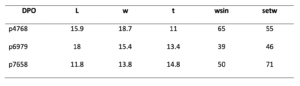
Tables must be sent as independent text files, in .doc format, named as Tab. X_fist author name (example: Tab. 1_González-Peréz). Arial font should be used with a size between 8 and 12 points. Column headings must be centered, in bold font, separated from the rest of the table by a line, and the data in the first column left-justified. No vertical or horizontal separation lines must be included. Generic and/or specific names must be in italics.
Example:
SUPPLEMENTARY INFORMATION
Supplementary data (measurement records, image files, scan data, character lists, matrices, etc.) must be archived in online repositories such as MorphoSource, Dryad, MorphoBank, MorphDBase or TreeBase. Alternatively, small size Supplementary files can be hosted on the website of the Spanish Society of Paleontology after consultation with the editorial team. The information provided should be included in the Supplemental Information section, immediately before the References section with details of the repository used and, ideally, information that could allow a reviewer to access to the unpublished data. This section will also include the declaration of the registration of new taxa in ZooBank, using, for example, the following formula: New taxonomic names proposed in this paper, and the nomenclatural acts it contains, have been registered in ZooBank, the online registration system for the ICZN: http://zoobank.org/References/XXXXXXXXX
NOMENCLATURE AND UNITS
Spanish Journal of Palaeontology uses the International System of Units (SI) for measurement units, the International Stratigraphic Guide for biostratigraphic and lithostratigraphic units, and the Time Scales and Geological Names used by the International Union of Geological Sciences (IUGS). The series and epochs of the time scale will be written with the initial in capital letter, if they are recognized by the International Chronostratigraphic Table, otherwise they must start with a lower case (e.g., Upper Cretaceous, but lower Paleocene). The same criteria will be applied to biozones or formations. However, when referring to multiple biozones or formations simultaneously, these will be always written with an initial lowercase letter, regardless of whether or not they are formally described (e.g., linearis Biozone, but linearis and tenuis biozones; Formation, but formations).
STYLE AND ABBREVIATIONS
The dash (–) should be used for stratigraphic boundaries (e.g., Triassic–Jurassic). A dot should be used to indicate decimal separation in metric numbers (e.g., 0.5). Metric units will always be abbreviated as mm, cm, m, km, etc. (without a period at the end). A space must be included between the numbers and their corresponding units (5 mm, not 5mm), but not in the percentages 25%, not 25 %).
In the case of abbreviating time units, use “yr” for values less than one thousand years, “myr” for thousands of years, “Myr” for millions of years, and “Gyr” for billions of years. Distinguish geological date/age (Ma) from a span of time (Myr). Use the abbreviation ca. (circa) to indicate approximations of time and measurements. Latin words must be written in italics, including abbreviations such as e.g., i.e., or et al., except those related to taxa (e.g., cf. or aff.). The comma that follows is never italicized. The rest of the abbreviations, whether institutional, anatomical or of any other type, must be introduced at the Introduction, Material and Methods, or in the figure and table captions, always in bold font at the first time they are mentioned. Variables, constants and mathematical probabilities (e.g., p = 0.5) should be written in italics. The sexagesimal coordinates should be indicated as follows: 57° 9′ 45.01″ N, 6° 6′ 15.56″ W. The abbreviations s.s. and s.l. should be used for sensu stricto and sensu lato respectively.
Ethical Statements and Inclusive Language
The Spanish Journal of Palaeontology’s Ethical Statements
Spanish Journal of Palaeontology is committed to the highest standards of both critical scholarly review and professional publishing judgment. By insisting on thorough peer review procedures in combination with careful editorial judgment, the Journal guarantees that only quality contributions receive the final acceptance.
We would like to highlight that submitted articles must be the authors’ own work, with novel and original contributions. Unethical scientific behaviour, such as Plagiarism, including unreferenced use of others’ ideas, replication without attribution of sections of text from other publications, the submission of a complete paper under ‘new’ authorship, or duplicate publication, understood as the production of multiple papers with the same, or essentially the same, content by the same authors, are never acceptable. In order to confirm the novelty of the contributions, all manuscripts are analysed by means of the anti-plagiarism system URKUND by Ouriginal. A text similarity of 20 per cent or more will be considered a high degree of plagiarism, and a deep review process will be conducted by the editorial team in order to unravel the nature of this resemblance. Plagiarism, whether deliberate or unintentional, is unethical in all situations and could result in the rejection of your manuscript. We would like to highlight that this conduct can damage your reputation and credibility as an author.
We encorage our potential authors to use an inclusive language, not only to recognize diversity but also in order to communicate respect and promotes equal opportunity. Therefore, authors should ensure that the content of their manuscript does not make assumptions about the beliefs of any reader, nor does it contain anything that would imply that one individual is superior to another on the basis of age, health status, race, ethnicity, culture, sex, gender, sexual orientation, or socioeconomic status. It is recommended to avoid using racial and ethnic terms in noun form (e.g., avoid Asians), adjectival form is preferred (e.g., Asian people); use neutral pronouns when a person has not shared their gender identity; avoid using descriptors that refer to personal attributes such as age, health status, race, ethnicity, culture, sex, gender, sexual orientation, or socioeconomic status unless they are relevant and valid to the study. Use inclusive language in the journal and do so without violating grammatical rules or impairing linguistic conciseness. This is usually possible, although it is easier in some languages than in others. More detailed information about the Spanish Journal of Palaeontology’s Inclusive Language Guidelines is on the link.
It is important to point out that although the information in this journal is believed to be true and accurate, neither the editors nor the publisher can accept any legal responsibility for any errors or omissions that may be made.
Obligations of the editors
All of the contributions received are evaluated under the criteria of our independent editor and associate editors. They are who make the publication decisions; ensuring the accuracy, completeness, and originality of every published article. The editors can share the decision with other members of the Editorial Board or with reviewers. In the event of an appeal of the decision of the editorial team, the editors may solicit the opinion of new reviewers.
The intellectual content of submitted manuscripts will be evaluated regardless of race, gender, sexual orientation, age, disability, religion, ethnicity or political philosophy of the authors.
All manuscripts are treated as confidential documents, that cannot be shown to anyone without the permission of the editors. The editorial staff should not disclose information about the manuscript submitted to anyone except the author, reviewers and potential reviewers. In this sense, unpublished data contained in the submitted manuscript cannot be used by editors or reviewers in their own research without the explicit consent of the author.
We support our journal editors in their efforts to manage the journal ethically and transparently, while adhering to the established editorial principles and practices in our field.
Obligations of the reviewers
Conflicts of Interest
To uphold impartiality, reviewers should consider any potential conflict of interest before agreeing to review and should contact the editorial team in the following instances:
- You are in direct competition with the authors
- You are a co-worker or collaborator with one of the authors
- You are in a position to exploit the authors’ work (commercially or otherwise)
- You may be legally prohibited due to national sanctions
- You are in a position which prevents you from giving an objective opinion of the work.
Minor conflicts do not disqualify a potential reviewer from reporting on an article but will be taken into account when considering the reviewers’ recommendations. Major conflicts of interest (especially relating to a financial commercial interest) could disqualify a potential reviewer.
If you suspect there may be a reason you should not act as a reviewer, please contact the editorial team (editor @ sepaleontologia.es) who will be able to investigate and advise. Therefore, if you are unable to act as a reviewer due to a conflict of interest, or do not feel competent enough to evaluate the research presented in the manuscript, you must inform the editor without delay in order to select an alternative reviewer.
Anonymity and confidentiality
Reviewers’ names are kept strictly confidential. Reviewers’ identities may only be disclosed to journal Editorial Board members, who are also instructed to maintain confidentiality, and finially to the authors with the reviewers consent. In any case, reviewers should disclose their identity to the authors, including sending reports directly to them.
Information and ideas obtained whilst acting as a reviewer must be kept confidential and not used for the personal benefit of the reviewer nor competitive advantage.
We also ask that you do not discuss the papers you have reviewed with colleagues unless they have been published.
Objectivity
Reviewers should judge objectively the quality of the research reported, give fair, frank and constructive criticism and refrain from personal criticism of the authors. Personal remarks and criticisms directed at the author or hurtful remarks directed at the text content are not eligible. Reviewers’ judgements must be clear, well-argued and respectful, so the authors can understand the basis of the comments and judgements.
Timeliness
Reviewers should inform the journal if they are unable to review a paper or can only do so with some delay. Reviewers should not delay the peer review process unnecessarily, either deliberately or inadvertently.
Citations
Reviewers are expected to point out relevant work that has not been cited, and use citations to explain where elements of the work have been previously reported. When writing a report reviewers should justify any literature references suggested for inclusion in the work. Please note that the Editor reserves the right to challenge excessive citation suggestions, especially to the reviewer’s own work. The Editor also reserves the right to exclude citation suggestions from reports to protect reviewers’ anonymity.
Suspected author misconduct
If a reviewer believes the work is substantially similar to a manuscript, any overlap between the manuscript and previously published data, or any paper published or submitted to any other journal, they should report this to the editorial board (editor @ sepaleontologia.es) for investigation.
Obligations for the authors
When determining the credit for a piece of work, authors should ensure that all those who have made a significant contribution are cited as co-authors. Other individuals who have contributed to the study in a lesser capacity should be acknowledged, but not cited as authors.
We encourage authors to make specific attributions of contribution and responsibility in the acknowledgements of the article, otherwise all co-authors will be taken to share full responsibility for all of the paper. Authors are expected to reach agreement between themselves regarding credit for authorship, and the order in which author names are presented.
Pre-submission considerations
Before you submit your manuscript to the journal, you need to take into consideration some important aspects of authorship listed below:
- Ensure that all the authors mentioned in the manuscript have agreed for authorship, read and approved the manuscript, and given consent for submission and subsequent publication of the manuscript.
- The order of authorship must be agreed by all named authors prior to submission.
- Full names, institutional affiliations, highest degree obtained by the authors, e-mail address (including ORCiD ID when available) need to be clearly mentioned on manuscript.
- The corresponding author, will take full ownership for all the communication related to the manuscript, should be designated and his/her detailed institutional affiliation (including the postal address, telephone number, fax number, and e-mail address) should be provided.
Manuscript submission
When submitting your manuscript, you need to follow the policies and guidelines of the journal. We expect authors to declare the following:
- The manuscript in part or in full has not been submitted or published anywhere. In other words, the authors should ensure that the manuscript is not a duplicate publication.
- The manuscript will not be submitted elsewhere until the editorial process is completed.
- If any part of the manuscript contains previously published content (figures/tables), authors should submit a statement of permission to reproduce the material signed by the author(s) and publishers concerned.
- If the manuscript is based on a dataset that has been the basis of another manuscript, authors should maintain transparency in such cases. They should declare that by referencing previously published article in the manuscript.
If there is a data set associated with the manuscript, provide information about where the data supporting the results or analyses presented in the paper can be accessed. Where applicable, this should include the hyperlink to publicly archived datasets, DOI, or other persistent identifier associated with the data set(s). Always check the journal’s guidelines for specific templates or style in which this information should be presented.
Inclusive Language
The Spanish Journal of Palaeontology’s Inclusive Language Guidelines
The use of inclusive language not only recognizes diversity but also will make academic publishing more accurate and more respectful (Ashwell et al, 2023) and promotes equal opportunity.
In order to provide principles and rationale, as well as examples of preferred language, in order to equip people with knowledge to choose the most inclusive words even as terminology preferences change we include here information from the Coalition for Diversity and Inclusion in Scholarly Communications free guides on inclusive language, formatting and images.
Gender, gender identity, and sexual orientation
Determine relevance
Denote a specific gender, sex, and gender identity where it is relevant (e.g., the appointment of a chairwoman was one step towards meeting legal requirements.). Otherwise use neutral terms (e.g., the chairperson) and neutralizing strategies (e.g., passive voice to eclipse the subject, plurals, “one”, etc.).
Distinguish clearly between gender, sex, and gender identity
Take care to distinguish between three interrelated terms gender, sex, and gender identity when necessary: gender denotes a primarily socio-cultural construct; sex denotes biological assignment; and gender identity primarily denotes a person’s psychological sense of their gender.
Use non-gendered terms and avoid stereotypes
Care should be taken to use gender-neutral and gender-inclusive language. In general, expressions that reinforce gender stereotypes should be avoided, as should terms that insinuate only one gender is involved in the specified task or role.
When referring to all human beings, non-gendered terms are preferred: individuals, people, and persons, or humanity, humankind or human race
When referring to all human beings in a role or occupation, non-gendered terms are preferred: firefighter, mail carrier, and homemaker.
Use of nonbinary, gender-neutral, and gender-specific language
In general, nonbinary and gender-neutral language should be used.
Some pronouns people may use include gender-specific binary terms such as “she” and “he”, as well as gender-neutral terms such as “they” and “them ”. (Note that these examples are not exhaustive. Refer to the Resources for more information.) Whereas specific pronouns and terms such as “she” and “he” may at times be appropriate, “they” and “them ” have the advantage of also including nonbinary persons.
The singular gender-neutral “they” is preferred over alternating “she/he” and “he/she” as the latter excludes people who do not use those pronouns. However, the APA notes that the usage of “he or she” and “she or he” (without slashes) may be appropriate when referring only to persons who use these pronouns.
Adjectives should be used to describe people rather than labelling them with nouns. Example: “lesbian women” or “a lesbian woman” instead of “the lesbians” or “a lesbian”.
When gender-specific nouns are required, use “man” and “woman.” Example: “transgender man” and “cisgender woman” rather than “transgender male” and “cisgender female.”
When gender-specific adjectives are required, use “male” and “female” as in “a female researcher.”
When the age range is broad and age-specific terms such as “girl” or “woman” are therefore inaccurate, “male” and “female” can be used as nouns. “Female” and “male” are also appropriate to denote a transgender person’s sex assignment at birth.
Race and ethnicity
It is important to talk about matters related to race and ethnicity using terms that the community prefers and uses to self-identify rather than defaulting to what is generally accepted by dominant power holders and structures. This may require questioning and reimagining terms that have been historically used in favor of those identified by and for specific communities. Despite common belief, a person’s race, ethnicity, or nationality cannot be determined simply by looking at them.
| Race | a social construct that describes people with shared physical characteristics; not based on biology; not synonymous with skin color, ethnicity, or nationality |
| Ethnicity | the social identity and mutual sense of belonging that defines a group of people through common historical or family origins, beliefs, and standards of behavior (i.e., culture) |
| Nationality | refers to the country that a person belongs to, either by birth or naturalization |
Do not mention race or ethnicity if it is not relevant. If race is mentioned, consider whether mentioning that someone is white is relevant; do not treat it as the default.
What assumptions about default characteristics are made about people within the story? Avoid portraying people as stereotypes. Consider whether the context contributes to a stereotype. Example: A Black man who is a good athlete ; a Japanese American boy who is good at math.
Avoid generalizations and vague terms. Do not use continents as descriptors as this lumps large and often diverse groups of people together. Example: “Chinese American” instead of “Asian American” ; “Nigerian” instead of “African” ; “from the United States” instead of “American.” See also: Geopolitics guideline.
Do not use umbrella terms, such as “Black, Asian, and minority ethnic” (BAME) or “people of color”, when a more precise word or phrase is appropriate. For example, do not use BAME if the group referenced is only Black Britons. Note: the Roma, Gypsy, and Irish Traveller peoples are considered minority ethnic populations in the UK, and using BAME or BME as a synonym for people of color is inaccurate.
Be respectful. Do not use pejorative or derogatory terms, and do not use dehumanizing or fetishizing language. In particular, do not use food words to describe the color of someone’s skin or appearance. Example: caramel, cocoa, chocolate. The same goes for comparing people to animals.
The following definitions may be useful but should not be considered comprehensive. See the Resources for more information.
| Term | Definition |
| Aboriginal | In Australia: Legally, someone who is a descendant of an Aboriginal inhabitant of Australia, sees himself or herself as an Aboriginal person and is recognized as Aboriginal by members of the community in which he or she lives or has lived (ALRC 2003); a broad term that groups nations and custodians of mainland Australia and most of the islands, including Tasmania, Fraser Island, Palm Island, Mornington Island, Groote Eylandt, Bathurst, and Melville Islands.In Canada: An umbrella term that refers to First Nations, Métis, and the Inuit in Canada. “Indigenous” is somewhat preferred but specifics are better. |
| African American | People in the United States who share a lineage that can be traced directly or indirectly to Africa. Can be but is not always synonymous with Black. It’s best to ask. |
| Alaska Native | An umbrella term that includes Inupiat and Yupik, Alaskan Indians (Athabascan, Haida, Tlingit, and Tsimshian), and Aleut. They are culturally distinct and most prefer to be called “Alaska Native” instead of being grouped as American Indian (Diversity Style Guide). |
| American Indian; Native American | Both are generally acceptable and can be used interchangeably. “Native American” gained traction in the 1960s for American Indians and Alaska Natives. Over time, “Native American” has been expanded to include all Native people of the continental United States and some in Alaska. “Native American” is used only to describe groups of Native Americans— two or more individuals of different tribal affiliation. Identify people by their preferred tribal affiliation. |
| Asian Pacific Islander | Refers to both Asian Americans and Pacific Islanders. It’s best to be specific about what communities are being referenced (Guide to Covering Asian Pacific America). |
| Biracial; multiracial | Combination of two (or more) races. It’s best to ask how someone identifies as not all biracial or multiracial people use these terms. Do not use “mixed” as an alternative. |
| Black diaspora | Black people of African descent who are scattered throughout the world; refers to Black people whose ancestors were removed from the African continent through slavery and colonization and dispersed worldwide. |
| First Nations | Aboriginal peoples of Canada who are ethnically neither Métis nor Inuit. |
| Gypsy; Traveller | Romani Gypsy and Irish Traveller are distinct ethnic groups under UK race relations legislation. Both terms should be capitalized when referring to the peoples. Do not use as a general term meaning “wanderer.”Note: Some Roma people find the term “Gypsy” offensive. Whenever possible, ask what term is preferred (PIRC; Guardian). |
| Hawaiian | A person who is of Polynesian descent. Do not use to refer to someone living in Hawaii. |
| Hispanic | Refers to persons of Spanish-speaking origin or ancestry |
| Indian | A person with ancestral ties to India. Use “Indian American” to refer to a U.S. permanent resident or citizen with ancestral ties to India. Do not confuse with “American Indian”. Do not use to refer to Indigenous peoples of the United States. |
| Indigenous | “While an official definition of ‘Indigenous’ is not agreed on, the United Nations has developed an understanding of the term based on self-identification, historical continuity to pre-colonial and/or pre-settler societies, links to territories and resources, distinct social, economic and political systems and possession of distinct languages, cultures and beliefs. In the case of the United States, tribal membership or citizenship denotes Indigenous identity. These factors make the words Indigenous and Aboriginal identities, not adjectives, and NAJA urges outlets to capitalize these terms in order to avoid confusion between indigenous plants and animals and Indigenous human beings. Finally, avoid referring to Indigenous people as possessions of states or countries. Instead of Wyoming’s Indigenous people, say the Indigenous people of Wyoming ” (Diversity Style Guide). |
| Latino/a/x | refers to anyone of Latin American origin or ancestry |
| r eserve; reservation | Land, either ancestral land or land Native nations were forcibly removed to. Note that these are not the same as a Native nation’s name (Native Governance Center) |
| Tribal affiliation | identify Indigenous people by their specific tribes, nations, or communities whenever possible. Ask what the preferred term is. |
| Tribe | Use with caution. Better to use “nation” or specify the ethnic group unless “tribe” is the preferred term.Within the United States, many Native Americans prefer the term “nation” because their people have signed treaties with the United States that recognize them as nations. Some Native Americans prefer their national affiliation instead of using the generic term Native American, e.g., Navajo, Hopi, Cherokee.Avoid referring to different ethnic groups as tribes. For example, Hutu and Tutsi are ethnic groups, not tribes. |
Terms to avoid or use with caution:
| Avoid | Preferred |
| black, Asian, and minority ethnic (BAME); black and minority ethnic (BME) | Name the specific groups instead. Previously used in the UK until 2021. |
| Black, Indigenous, and People of Color (BIPOC) | Being specific is preferred. “People of color” may be acceptable; do not use POC. |
| POC | Being specific is preferred. “People of color” may be acceptable; do not use POC. |
| model minority | Do not use as this is a stereotype and is considered offensive. |
| minority | Avoid using to describe people. Be specific whenever possible. Not synonymous with people of color. |
| Colored | Pejorative. Do not use.Note: I n some African countries, “colored” denotes those of mixed racial ancestry and is acceptable. |
| skin-colored; nude | Avoid or be specific as to its meaning. Often exclusionary as it usually refers to white skin. |
| Mulatto | Outdated term for a person with one white parent and one black parent. Avoid as it is considered insensitive. Biracial or multiracial may be appropriate. |
| native | Should only be used as an adjective, not a noun. |
| nonwhite | Avoid. Be specific instead. |
| Oriental | Pejorative; do not use to refer to people. May be acceptable in certain uses (e.g., oriental rugs). |
| master/slave | main/secondary; primary/secondary; leading/alternative; source/replica. |
| whitelist/blacklist | b locklist/allowlist; exclude list/include list; avoid list/prefer list |
| Caucasian | Do not use to mean w hite. |
| Powwow | Acceptable only if referring to the title of a specific American Indian event. Avoid if referring to a general gathering. |
| ethnic; exotic | Avoid. These terms can be seen as marginalizing and offensive as they are often used to denote things from countries outside North America and Western Europe. Name the specific country or culture the item being described comes from. |
| Eskimo | “A member of the Indigenous people who have traditionally inhabited Alaska and other Arctic regions, including eastern Siberia in Russia, Canada and Greenland.” Some consider the term pejorative, and it should be used with caution. |
| mixed | Be specific. Multiracial is also acceptable. |
| gypped | Derogatory. Do not use. |
| Untouchable | Dalit |
Geopolitics
First, consider how the narrative is framed. The FrameWorks Institute defines framing as “the choices we make in what we say and how we say it,” including “what we emphasize, how and what we explain, [and] what we leave unsaid.”
Who is telling the story? From what perspective is the situation viewed? It is easy for authors to write from their own perspective, an ethnocentric point of view, simply because this is how they naturally see the world. Other times, the point of view is that of whatever group is considered “default” or has power in society. One example of this is Eurocentrism, or Western bias.
| Ethnocentrism | the attitude that one’s own group, ethnicity, or nationality is superior to others |
| Eurocentrism | the tendency to interpret the world in terms of European or Anglo-American values and experiences |
It is common for the default point of view to be centered on so-called Western countries, like the US, UK, and other predominantly white, higher- income countries.
References and resources
Ashwell, S.J. et al., 2023. Three recommended inclusive language guidelines for scholarly publishing: Words matter. Learned Publishing 36(1): 94-99. https://doi.org/10.1002/leap.1527
The Guidelines are freely available on PubPub at https://c4disc.pubpub.org/guidelines-on-inclusive-language-and-images-in-scholarly-communication.
Privacy Policy – Política de Privacidad
Privacy Policy
Confidentiality and security are core values of SEP, therefore we are committed to guaranteeing the privacy of our users and not collecting unnecessary information.
On this page you can find the necessary information about our Privacy Policy concerning the personal data we collect, explaining:
- Who is responsible for the processing of your data.
- For what purposes we collect the data we request from you.
- What is the legitimacy for its treatment.
- How long we keep it for.
- To which recipients your data will be disclosed.
- What your rights are.
Responsable:
Spanish Association of Palaeontology (SEP)
Museo Nacional de Ciencias Naturales, José Gutiérrez Abascal 2, 28006 Madrid
comunicacion@sepaleontologia.es
Purposes, legitimacy and conservation of the processing of data sent via:
- MEMBERSHIP APPLICATION FORM (INDIVIDUAL MEMBERS)
Purpose: To evaluate and manage your application to join the Society. If your membership application is approved: To manage your registration as a member, collection of fees and other administrative procedures; to fulfil the functions and purposes described in the Statutes and other objectives related to your membership; to send you information and commercial communications related to our field of interest, as well as invitations to events, congresses, training courses and activities, including by electronic means; and, if you tick the acceptance box, the publication of your data in the association’s membership directory to promote the organisation and its members.
Legitimation: Consent of the interested party when submitting their application. Members: Execution of the membership agreement; legitimate interest in sending information and communications of interest to our scope and consent to the publication of their data.
Recipients: Membership applications: no transfer of data is foreseen. Members: Public and/or private bodies necessary for our purposes and those legally foreseen.
Retention: Registration applications: During the process of verification of membership requirements. Members: During registration with the entity and, once this has been completed, during the periods required by law to meet possible liabilities. Sending of information: During the registration process or until you request to unsubscribe from our mailings.
- MEMBERSHIP APPLICATION (CORPORATE MEMBERS)
Purpose: To manage the registration, comply with the purposes described in the Statutes and send informative communications related to our scope by electronic means.
Legitimation: Execution of the agreement, legitimate interest in processing personal data of the contact person of the associated entity or company and in sending information and communications of interest to our scope.
Retention: For the duration of the relationship with the entity. Sending of information: While you are registered with the entity or until you request to unsubscribe from our mailings.
- CONTACT FORM
Purpose: To answer your requests for information, attend to your requests and answer your queries or doubts.
Legitimation: The user’s consent when requesting information through the email address or by completing the registration form on the website.
Conservation: Until your request has been answered by e-mail if it has not generated a new treatment.
- PAPERS SUBMISSION TO THE SJP (Spanish Journal of Palaeontology)
Purpose: To reply to your requests for publication of articles, attend to your requests and answer your queries or doubts.
Legitimation: The user’s consent when completing the registration form.
Retention: Until the necessary steps have been taken to complete the process of publishing the article in the journal, if no further processing has been generated.
Obligation to provide us with your personal data and the consequences of not doing so.
The provision of personal data requires a minimum age of 14 years or, if applicable, sufficient legal capacity to enter into a contract.
The personal data requested are necessary to manage your requests and/or provide you with the services you may contract, so if you do not provide them, we will not be able to attend to you correctly or provide you with the service you have requested.
- Recipients of your data
All personal data collected is confidential and will not be passed on to third parties, unless there is a legal obligation to do so.
Personal data and comments sent using the contact form will only be accessible by the members of the Board of Directors and, where appropriate, by the professional assigned to deal with your query.
- Rights concerning your personal data
Any person may withdraw his or her consent at any time, where such consent has been given for the processing of his or her data. In no case does the withdrawal of this consent condition the execution of the subscription contract or the relations previously generated.
You may also exercise the following rights:
- Request access to your personal data or their rectification when they are inaccurate.
- Request their deletion when, among other reasons, the data are no longer necessary for the purposes for which they were collected.
- Request the limitation of their processing in certain circumstances.
- Request opposition to the processing of your data on grounds relating to your particular situation.
- Request data portability in the cases provided for in the regulations.
- Other rights recognised in the applicable regulations.
Where and how to request your Rights: By writing to the data controller at the postal or e-mail address (indicated at the top of this page), indicating the reference “Personal Data”, specifying the right you wish to exercise and concerning which personal data.
In case of disagreement with the company concerning the processing of your data, you may complain with the Data Protection Authority (www.aepd.es).
- Cookies
This website uses technical, personalisation and analysis cookies, our own and/or third-party cookies that process connection and/or device data, as well as browsing habits for statistical purposes.
Therefore, when accessing our website, in compliance with Article 22 of the Law on Information Society Services, when processing the aforementioned cookies, we have requested your consent to their use and provided information about them.
- Security of your personal data
To safeguard the security of your personal data, we inform you that we have adopted all the technical and organisational measures necessary to guarantee the security of the personal data supplied from alteration, loss, and unauthorised processing or access.
- Updating your data
For us to keep your personal data up to date, it is important that you inform us whenever there have been any changes to your personal data, otherwise, we cannot be held responsible for the accuracy of the data.
We are not responsible for the privacy policy regarding the personal data that you may provide to third parties through the links available on our website.
This Privacy Policy may be modified to adapt it to any changes that may occur on our website, as well as any legislative or jurisprudential modifications on personal data that may appear, so it must be read every time you provide us with your data through this website.


